Why the Green Party Supports Proportional Representation

This article is largely reprinted from the “Entitlement” article in my Whoa!Canada Proportional Representation series.   


The electoral reform process in Canada has begun.

The Green Party has long supported meaningful electoral reform to Proportional Representation, and I’ll do my best to explain why here.

Any Proportional system Canada might adopt will be a huge improvement to our democratic process. This is because it will produce a Parliament that truly represents Canadians. As our Fair Vote friends are fond of saying, 39% of the votes will achieve 39% of the power.

Around the world, nobody switches to a First Past The Post system because it is not only antiquated, it doesn’t work very well. In fact, more than 85% of OECD countries use Proportional Representation, and some progressive countries have been using PR for well over a century.

But it is really hard to replace a First Past The Post electoral system, because the politicians who benefit disproportionately are generally not inclined to adopt a fairer system, because it will limit their own power to what they earn in votes. It is a credit to Mr. Trudeau’s government that they are going through the promised reform even after winning a majority government.

disproportional representation

Canada’s current electoral system results in disproportional representation.  This is breathtakingly apparent when you look at the back to back “majority” governments we’ve had.  The thing that hits the eye with these two election result graphs is the almost identical consecutive wins achieved by different parties.  The 2011 Conservatives won a phony majority with 39% of the vote, just as the 2015 Liberals won a phony majority with 39% of the vote.  This is a winner take all system, so that’s the only part of the graph that matters.
Election Results: 2011 and 2015But looking at the details, you can see a clear picture of the unfairness in the system.
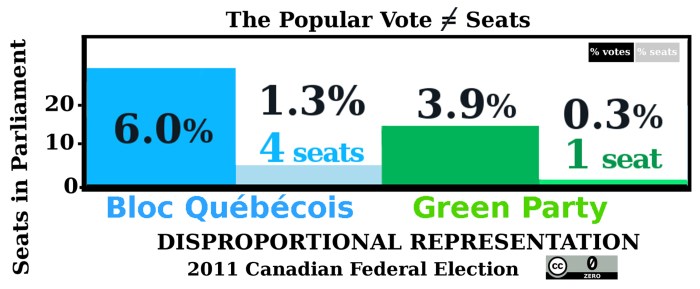
POPVOTE≠SEATS-bloc-green-2011

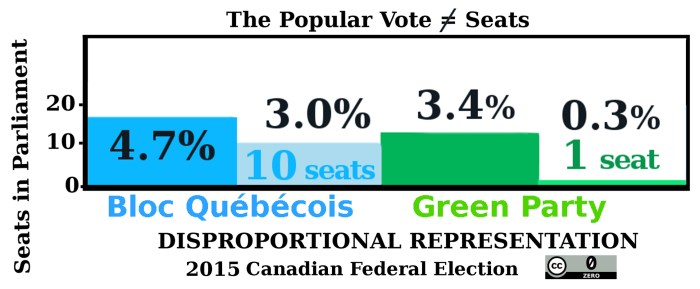
In 2011 the Bloc Québécois won 4 seats with 6% of the vote.  In 2015 the Bloc Québécois won 10 seats with only 4.7% of the vote.

I don’t know about you, but I just can’t get my mind around the idea that fewer votes can more than double a party’s seats in Parliament.

In these two elections, the Green Party outcome was consistent, winning 1 seat with approximately 3 percent of the vote. 

While the Green Party’s 3-4% of the vote only won a single seat in Parliament, the Bloc’s 6% and 4.76% won four and ten seats respectively.   Such crazy math in the “easy to understand” First Past The Post is one of the reasons Canadians are likely to say “I don’t understand politics.”

There is a reason for the disparity between the two small parties.  While both parties suffer from the inequity in our Winner-Take-All system, the Green Party’s support is spread out across Canada but Bloc voters are concentrated in the same geographic region.  With more Bloc voters in a riding, the party has a much better chance to win seats.  Even so, the Bloc still gets less than half as many seats as their votes warrant.
POPVOTE≠SEATS-bloc-green-2015

With our single member plurality electoral system, the party that wins a majority of seats wins a disproportional amount of power.  This gives the candidate (and party) with the most votes the win.

Not just any win, THE win.

For a candidate, that means s/he is the only representative — and the only voice — for the electoral district where s/he was elected.  For a political party, that means a majority of seats, even though that party failed to win a majority of the votes cast.  And whenever anyone talks about electoral reform, that’s pretty much what everyone looks at: how our system works for political parties.

Too often forgotten in discussions of electoral reform is how our system works — or doesn’t — for the Canadian people.

Politics isn’t a job creation program for politicians, it is supposed to provide citizens with representation in Parliament so our laws and policy reflects what citizens want and need.

Our representatives are elected in single member electoral districts: that means each district elects only a single Member of Parliament who is expected to represent everyone in the electoral district.  That’s what Canadians are used to, and I (like most of us, I suspect) have long thought this is how it has to be because this is how it’s always been.  And yet lately I’ve been learning Canada has used a variety of different voting methods in different parts of Canada over the years.

Although our MP can help us all equally if we bring them an administrative problem that requires cutting through bureaucratic red tape, or sometimes find a compromise on a contentious issue that will satisfy most citizens, when it comes to policy, none of us can realistically expect an MP who campaigns in favour of one issue to fight against it after they have been elected.

As you can imagine, it isn’t often we’ll hear any sitting MP talking about this problem in public; so it was pretty impressive to hear former Guelph MP, Frank Valeriote admit this publicly during his last term of office.

What ordinary people expect from democracy — what we are told to expect — is that our MP will represent us. But the reality is that one person can’t possibly represent the opposing views of a hundred thousand constituents.

This is why multi-member districts — larger electoral districts which elect multiple MPs — are a great idea.  When more than one MP is elected in a district, more than one view from the district can be represented in Parliament. And after all, isn’t that the point of democracy?

Electoral Reform for Greens

How many votes does it take to get a seat in Parliament?

Small parties almost always favour Proportional Representation because small parties and independent candidates are the most disadvantaged by winner-take-all systems.  The graph shows us just how badly the Green Party of Canada fared in 2015.  We all know that it was even worse in 2008 when almost a million votes failed to elect any Green candidates at all.  From the outside it looks as though the Green Party is doing badly… worse, in fact, than 2008.  Although I haven’t done a scientific study, or even conducted a public opinion poll, I don’t believe that for a minute.

Green supporters don’t often stop thinking green thoughts or wanting a sustainable future or believing green policy.  But in the face of an electoral system that makes it nearly impossible to get candidates elected, intelligent people very often switch to other parties in desperation.  Although we are all very much aware of the bigger parties appropriating Green policies, we don’t often realize this is often because Green supporters bring them along.

This is not just a Canadian problem; this is a feature of the First Past the Post electoral system.  If we look across the pond we can see the UK has the same problems with FPTP as we do.  In some ways even worse, as it took four million votes to elect a single UKIP MP in their most recent election.

Politics is not simply a numbers game.  Even though most Canadians haven’t really understood why our political system fails to work the way we think it should (by providing us with representation), most of us have known the system is badly broken for a very long time.  And since the system has not been working for us, so many Canadians have fallen under the spell of strategic voting in vain hopes of gaming the system to make it work for us.

I can’t tell you how many times during the campaign that people told Bob how much they wanted to vote for him but felt they couldn’t.  One of the very worst things about all this strategic voting is that because so many Canadians are not voting for who/what they want, the reality is there is no way to tell what most Canadians actually do want.  It’s kind of like not having accurate census data: in the absence of fact, the government is free to do whatever it likes.  Especially when a single party holds a majority.   It is worse still when it’s a phony majority, as most of ours are.   Since 1945 there have only been 2 majority governments a majority of Canadians voted for, and before that, only 4 Canadian “majority” governments in Canada were actually elected by more than 50% of the vote.  And defenders of the status quo try to paint coalition government as undemocratic!

Proportional Representation for Canada will mean larger electoral districts which have more than a single MP, and they will almost always result in coalition governments. Far from being undemocratic, majority coalition governments are elected by an actual majority of voters!

Some people think the political parties advocating for electoral reform to Proportional Representation are doing it because it will give them an advantage.  This is simply not true.  Proportional Representation would most certainly improve the lot of the smaller parties, but not by giving them an unfair advantage, but by removing the unfair advantage the winning party gets under our winner-take-all system.  Proportional Representation is intended to ensure the votes each candidate and/or party earns is reflected in the power they get in Parliament.

Institutional Discrimination

Small parties suffer systemic discrimination in the Canadian system.  Even with sitting MPs, the Green Party of Canada and the Bloc Québécois parties are not treated equally.   The argument in support of this discrimination is that neither party has enough seats in the House of Commons to be counted as an official party.

But political parties are required to jump through bureaucratic government hoops to get registered by the government before any candidate is allowed to compete in an election under the party banner.  Federal Registration is how a political party gets on the ballot and becomes a real party.   Why isn’t a “Registered Party” an “Official Party”?

Where did this crazy idea that a party with a sitting MP is not a real party until X number of candidates have been elected come from?  If there was ever any doubt about the fact “X” is a purely arbitrary construct designed to privilege the two largest parties, it was dispelled in the aftermath of the 1993 Canadian election when the Progressive Conservative Party was reduced to two seats.  At that point an exception was made to allow the Progressive Conservative Party to retain the special perks of “official party” status even though it had only 2 seats.  In spite of the fact the Canadian electorate had unambiguously indicated that party should no longer be so entitled.

So while the Progressive Conservative Party whose governance angered an overwhelming number of Canadians was allowed to retain its privilege, a Green Party with 2 sitting MPs was not an “Official Party,” any more than the Bloc Québécois is today with 10 sitting MPs.

But Official Party status delivers financial perks.  It isn’t enough that our Winner-Take-All system gives the winning party an unfair advantage in seats, the “official parties” get extra funding for party leaders, party whips, cabinet positions, parliamentary secretaries etc.   All paid for by taxpayers, including Green taxpayers — while our party is denied the funds intended to aid a party in representing its constituents.  Elizabeth May is not only an Independent candidate doing a phenomenal job for her constituents in , she represents the interests of more than 600,000 voters — including those of us waaaaaay over here in Waterloo Region.

The Parliament Buildings

If the number of votes needed to elect a Member of Parliament was consistent, if 38,000 votes translated into one MP, as it did on average for the Liberals, the Green Party would have earned enough votes to elect 16 MPs in 2015.  Which ought to be more than enough to achieve official party status even in our Winner-Take-All world.  But the system we have in place is not about fairness for Canadians, it’s about keeping the real power in the hands of the two most powerful parties.

The idea that any candidate who wins an election and goes to Ottawa to sit as a Member of Parliament should be denied the same rights and respect as any other MP is not only ludicrous, it is undemocratic.  

The problem is not so much that the candidate or the party is discriminated against, although that certainly isn’t fair.  The real trouble is that the citizens who elected these MPs are discriminated against.  Our winner-take-all system has allowed the deck to be stacked against small parties and independent candidates, but worst of all, against citizens.  Seems to me all Canadian voters ought to be entitled to representation.  Even in our terribly unrepresentative  representative democracy, all votes should be effective because all voters should be equal.

Proportional Representation will benefit the Green Party

If the votes cast in past elections are anything to go by, Green voters are likely to benefit most from Proportional Representation.  Some might suggest this is unfair, but the opposite is true.  The disproportional election results we get now give the winning party an advantage it hasn’t earned at the expense of the other parties.  As the Green Party is the most disadvantaged by our disproportional Winner-Take-All system, getting the seats in Parliament it deserves might look like a windfall, but the truth is the Green Party will only get the seats it has earned in votes, making it better able to represent its constituents in Parliament..

The way Green voters benefit is by actually getting the representation in Parliament we voted for.

Cambridge Greens Avatar

KitCenAvatarKitConAvatarKitSHAvatarWaterloo Green Party

WRGREENS FINALavatar


For more information, my Whoa!Canada series is intended to demystify Proportional Representation. This is the series so far:

• Proportional Representation for Canada
• What’s so bad about First Past The Post
• Democracy Primer
• Working for Democracy
• The Popular Vote
• Why Don’t We Have PR Already?
• Stability
• Why No Referendum?
• Electoral System Roundup
• When Canadians Learn about PR with CGP Grey
• Entitlement

There are also a PR4Canada Resources

which includes links to Proportional Representation source material and articles, as well as helpful videos.

[Truth be told it was John Cleese who convinced me.]
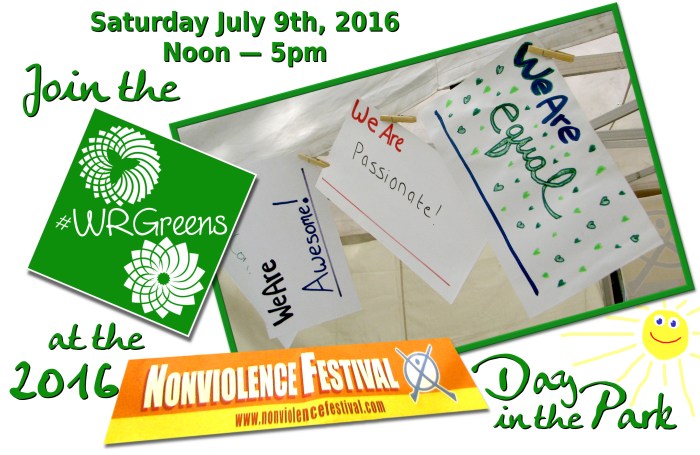
A Day in the Park

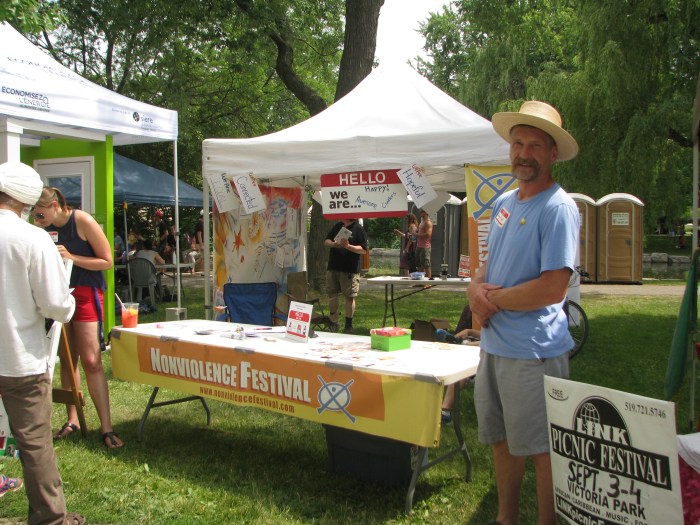
Nonviolence Festival Booth at the Multicultural Festival

This year our own Bob Jonkman (Kitchener—Conestoga) has been involved in organizing the annual Nonviolence Festival Day In the Park.  This family friendly free festival is held in the cool shade of the Victoria Park island.

Building New Relations

The world is built through our relationships – each of us affecting the other, and being affected by our surroundings.

Building New Understanding

The way we understand the world (our personal values, beliefs, philosophies, etc.) guide what we do in the world.

A change in consciousness equals a change in the world.

Building New Strengths

As we continue to act in the spirit of nonviolence, we grow internally, developing new skills and comprehensions.

By working together in new ways we open the future to new personal and social possibilities.

History

The first Nonviolence Fair and Concert was held in 2005, in Waterloo Park. It was organized by volunteers to highlight the many positive activities in Waterloo region.

— Nonviolence Festival

Drop by and say “hi” to the folk at the Green Party information booth!
And don’t forget to sign Elizabeth’s electoral reform petition!

Nonviolence Festival Day in the Park

Clothes Swap

clothing stall at 2016 KW Multicultural FestivalWednesday, 6 July 2016 from 6 PM – 8 PM Trusted Clothes is hosting a clothing swap at 283 Duke Street West, Kitchener, Ontario

Click here for a Map

Bring good quality clothes that you don’t want anymore and leave with the same amount of new stuff!

Event is completely free and is to raise awareness about textile waste and the environment.

Men’s, women’s, kid’s, baby’s, accessories and shoes – all are welcome.

We have partnered with the Kidney Foundation to collect any leftover clothes with proceeds going to research. Please feel free to bring any clothing you wish to donate as well.
Trusted Clothes facebook event page

Although this is not a Green Party event, Trusted Clothes commitment to ethical, sustainable environmentally friendly (and health conscious!) endeavours will very likely appeal to green folk.

Have a Green Canada Day!

Happy Canada Day There’s lots to do to celebrate Canada Day locally today.

Did you know Cambridge Green Candidate Michele Braniff is CreateWaterloo’s Artist in Residence?  You can spot some of her work inside Grand River Transit buses.

Michele Braniff
Michele Braniff

To celebrate Canada Day, join Michele this afternoon between 1 – 3 for Drop in urban sketching at the old  Waterloo Train Station 10 Father David Bauer Dr, Waterloo, ON N2L 6M3 [directions here]

Michele promises a fun experience using pens on blank paper to produce your own highly personal & creative record of summer street scenes in Uptown Waterloo. There will be tips & coaching on selecting drawing sites, framing the sketch and using lines and shapes to suggest people, buildings and perspective. Bring your own tools and chair.

Then at 4:00pm Michele will be hosting a Story Telling Concert

In the tradition of campfires and listening together, Michele invites you to a storytelling event at the train station where she will use voice, expression and imagination to re-create the ancient tradition of storytelling. In celebration of Canada Day, Michele has created and collected stories to celebrate Waterloo County and Canada.

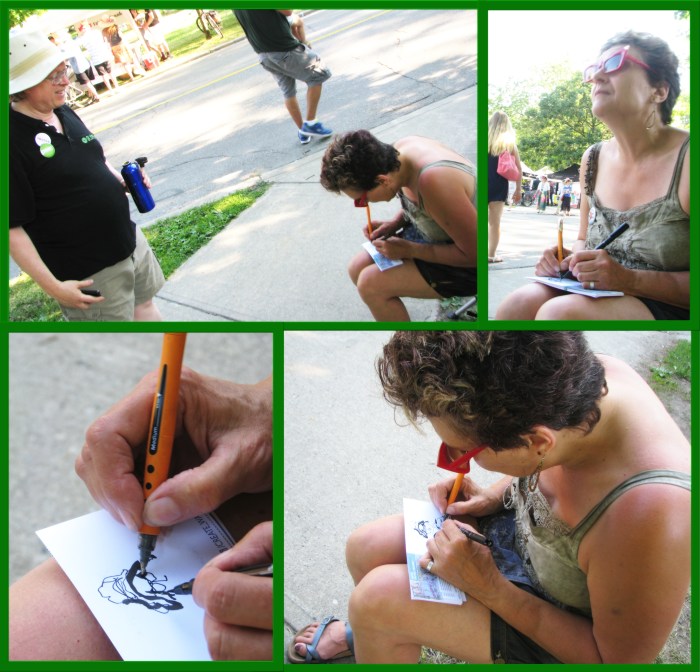
Michele Braniff sketches Bob Jonkman at the KW Multicultural Festival
Artist At Work: Michele Braniff sketches Bob Jonkman at the KW Multicultural Festival

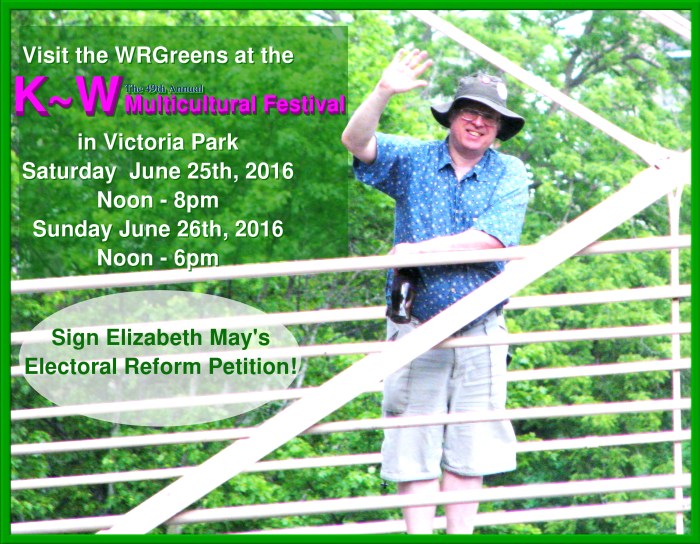
49th K~W Multicultural Festival Weekend

join WRGreens @ K~W Multicultural Fest 2016
Visit the WRGreens info booth at the K~W Multicultural Festival  in Victoria Park
Saturday June 25th, 2016
Noon – 8pm
Sunday June 26th, 2016
Noon – 6pm

Sign Elizabeth May’s Electoral Reform Petition!

Pick up your own WRGreens sticker!

Cambridge Greens AvatarKitCenAvatarKitConAvatarKitSHAvatarWaterloo Green Party WRGREENS FINALavatar

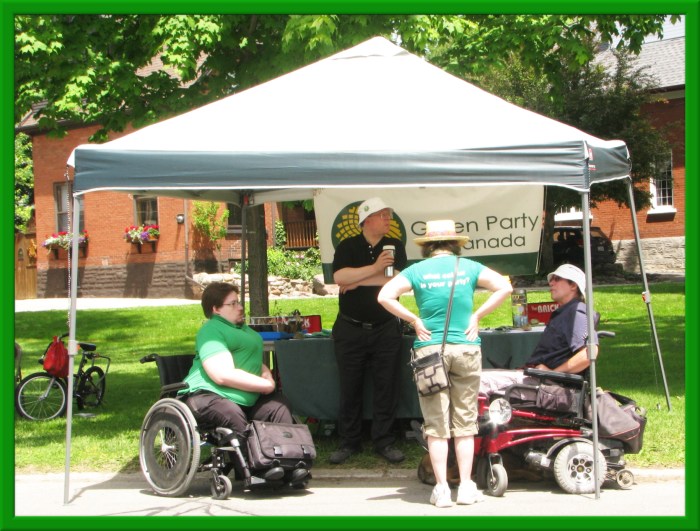
Candidates Nick Wendler (#KitCen) and Bob Jonkman (#KitCon) at the 2015 WRGreens Booth
Candidates Nick Wendler (#KitCen) and Bob Jonkman (#KitCon) the K~W Multicultural Festival WRGreens Info Booth (2015)
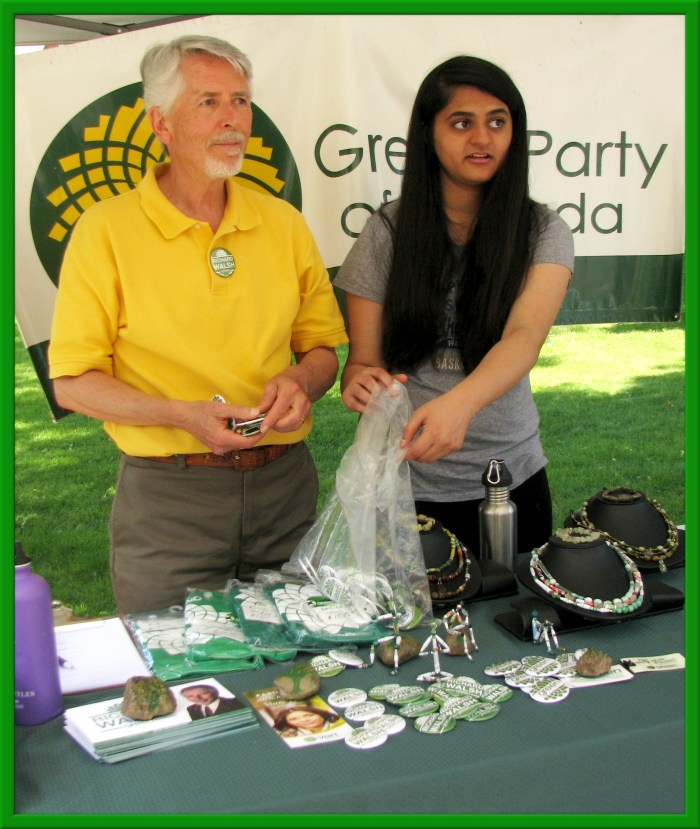
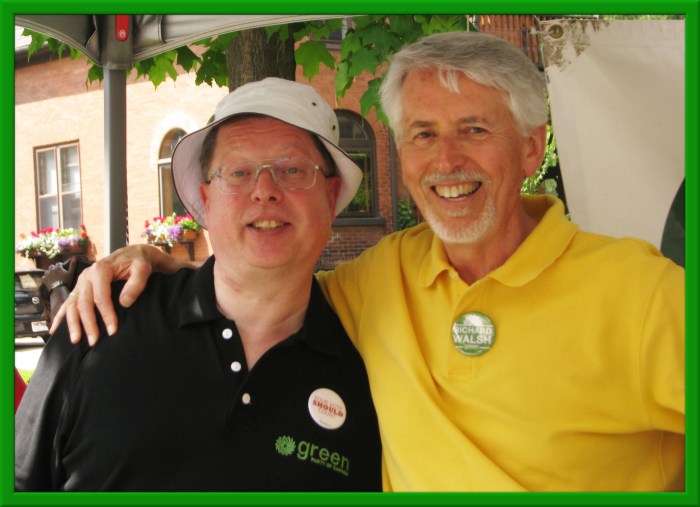
Candidate Richard Walsh (#Waterloo)
Candidate Richard Walsh (#Waterloo) dispenses Green Party buttons at the 2015 K~W Multicultural Festival
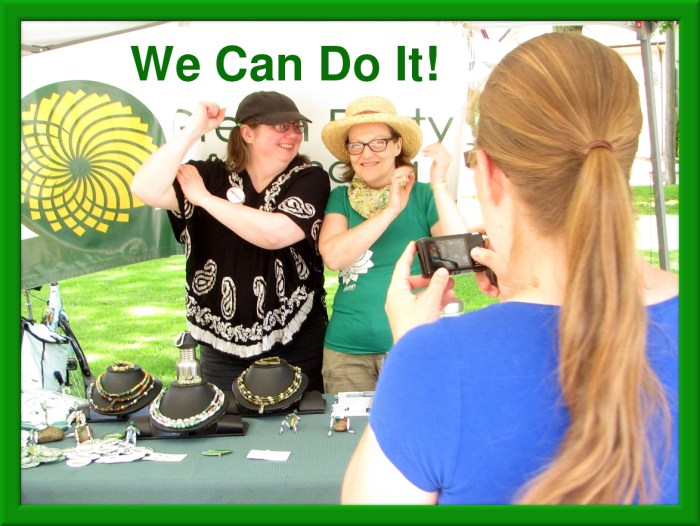
Laurel & Laura "We Can Do It"
Laurel & Laura “We Can Do It”
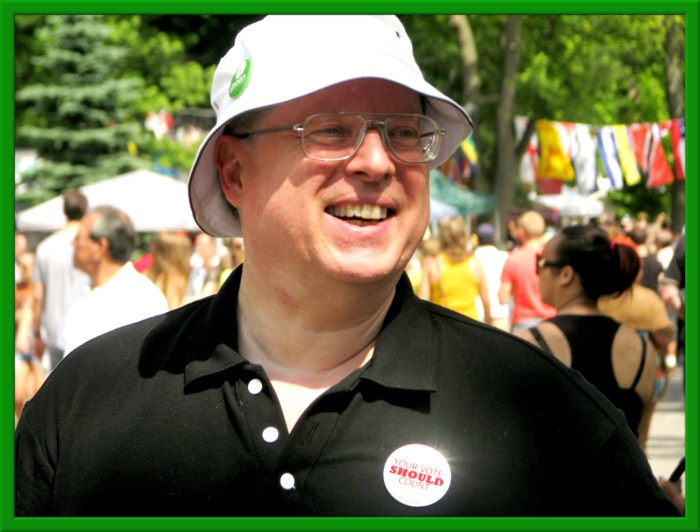
Bob Jonkman (Kitchener-Conestoga)
WRGreens were selling Heritage Tomato seedlings last year.
WRGreens are always happy to talk about Green issues.
2015 #GPC Candidates Bob Jonkman and Richard Walsh


National Aboriginal Day in Waterloo

National Aboriginal Day at Waterloo Library
Drummers opened the Film Festival at the Waterloo Library.

The month of June is National Aboriginal History Month.  This year marks the 20th annual National Aboriginal Day in Canada, a celebration of the history, culture and contributions of the First Nations, Inuit and Métis peoples of Canada on the Summer solstice, June 21st.
Waterloo Public Library
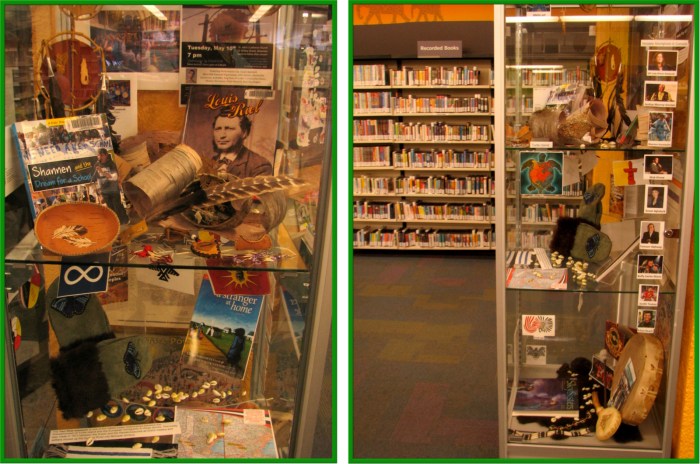
There is a lot of interesting stuff in Waterloo Library’s National Aboriginal History Month display.  North America is known as “Turtle Island” among Canada’s Indigenous population.
Turtle Island (by Mark Wagner)
When explorers and then settlers arrived in the already occupied “new world,” instead of learning from and co-existing with the indigenous peoples, they intended to (and did) take the place over.  The settlers made treaties with the inhabitants, who were happy to share their world and trade with the newcomers.   And so treaties were made.
But the North American native population didn’t realize who they were dealing with, and so they took the Europeans at their word.

National Aboriginal Day display
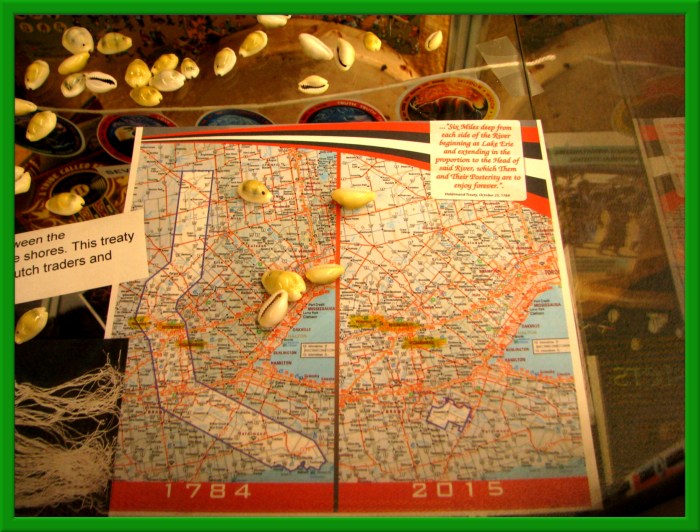
The map below shows the area promised by the Haldimand Treaty October 25th, 1784:

“…Six miles deep from each side of the river beginning at Lake Erie, and extending in the proportion to the head of said river, which Them and Their Posterity are to enjoy forever.”

Treaty Land map

On the the 2015 side of the map you can see that “forever” didn’t mean what we think it means.  For the Indigenous inhabitants, dealing with the Europeans was like dealing with Darth Vader… the deal kept changing and nothing could be done.

Last night I had the privilege of attending indigiNATE Now, the National Aboriginal Day Film Festival put on by Create Waterloo and imagineNATIVE.  The program consisted of a powerful series of award winning short films made by Aboriginal filmmakers from around the world.

I learned about the Film Festival from CreateWaterloo’s Artist In Residence,  Michele Braniff, an incredibly versatile and talented woman who Waterloo Greens remember as the Cambridge Green Party Candidate in the 2015 federal election.

My Story
9:15 minutes, 2013 | Directed by Shania Tabobondung

Using simple, yet clever whiteboard animation, a young woman’s personal journey of struggles and courage through her early life are poignantly and artistically depicted in this impressive film debut.

Shania Tabobondung is a 17-year-old Anishinabekwe from Wasauksing First Nation. Her passion for the written word and visual arts has led her to seek future academic studies in journalism and/or media arts. My Story was the 2013 imagineNATIVE Tour Video Contest winner, which had over 40 films in contention.

Barefoot
16min, 2012 | Directed by Danis Goulet

Like any 16-year-old, Alyssa desperately wants to fit in with the crowd. But will her dreams crumble as her deepest secret is revealed?

Danis Goulet (Cree/Métis) is an award-winning writer and director. Her short film Wakening played before the opening night film at the 2013 Toronto International Film Festival.

Liar
7:48min, 2012 | Directed by Adam Garnet Jones

A young man`s secret fuels a twisted vendetta for revenge in this powerful examination of intolerance.

Adam Garnet Jones (Cree/Métis) is a queer filmmaker originally from Edmonton, Alberta. His short films have been broadcast on television and screened widely at film festivals, including ImagineNATIVE. He is currently in post production on his first feature film, Fire Song.

Woodcarver
5:44, 2011 | Directed by Ehren (Bear) Witness

This innovative tribute in response to the murder of totem carver John Williams by a Seattle police officer in 2010 employs image mixing, documentary footage, and an ingenious soundscape to commemorate a tragedy not to be forgotten.

Bear Witness (Cayuga) is an Ottawa-based media artist who has been producing short experimental videos for over eight years. Bear is a member of the award-winning DJ collective, A Tribe Called Red.

Covered
6:50, 2014 | Directed by Tara Browne

This docudrama short film is an interpretation of an interview and performance of Buffy Sainte-Marie that originally aired on CBC TV’s program TBA with host John O’Leary in 1966.

Actress, filmmaker and singer-songwriter, Tara (Beier) Browne (Cree) won the Best Experimental award for this film at imagineNATIVE in 2014.

Snare
3min, 2013 | Directed by Lisa Jackson

Evocative and haunting, director Lisa Jackson crafts a stunning performance-based piece that captures the brutality of violence against Indigenous women, yet celebrates hope for a future illuminated through advocacy and understanding.

Named one of Playback Magazine’s 10 to Watch in 2012, Lisa Jackson’s (Anishinaabe) genre-bending films span documentary, animation and fiction. Her work has also garnered numerous awards and her film, Savage won the Genie award for Best Short Film in 2010.

A Common Experience
10:30min, 2013 | Directed by Shane Belcourt

Acclaimed playwright Yvette Nolan voices her personal experience in this beautifully poetic and intimate exploration of the multigenerational effects of Canada’s residential school system.

Shane Belcourt (Metis) is an award-winning filmmaker, writer and musician based in Toronto. His debut feature film, Tkaronto closed imagineNATIVE in 2007 and has screened at film festivals worldwide.

Apikiwiyak (Coming Home)
12:46min, 2014 | Directed by Shane Belcourt and Maria Campbell

In this collaborative work, originally presented as a live reading and visual accompaniment, Maria Campbell, an acclaimed Métis author from Saskatchewan sets out to hold a mirror out for Indigenous non-Indigenous people to peer into the never-ending legacy of colonial violence.

Maria Campbell (Cree/French/Scottish) is a community worker, storyteller and filmmaker whose bestselling autobiography Halfbreed – an important document on ethnic relations in Canada – encouraged many First Nations people to become writers. In addition to her many other publications, she has also written or directed stage plays, films and videos.

indigiNATE Now program: http://sawvideo.com/event/indigi-nate-now-province-nations-film

I had my first taste of Bannock, something I had believed to be a native staple, but I learned the real story last night.

Bannock

These two new Heritage Minutes were shown at the beginning of the program.

Why Isn’t Ontario Protecting Our Water?

On April 24, 2007, Environmental Commissioner Gord Miller released a report in which he warned that “funding cuts spanning 15 years have left Ontario vulnerable to a catastrophe similar to the Walkerton tainted water tragedy.” (Guelph Mercury, April 25, 2007). The Mercury reported that Miller also told a press conference in Sudbury that, “Our present course puts our ecosystems, our biodiversity, our health and parts of our economy at serious risk of deterioration and catastrophic events.”

Missive on Nestle’s Water Taking in Aberfoyle

In 2007, residents were challenging Nestlé’s Water Taking in Aberfoyle, citing the disconnect between MPP Liz Sandalls claim the “The Clean Water Act focuses on source water protection” while effectively allowing Nestlé to take whatever water it likes absent independent data on the impact to local aquifers.

Bottling and selling our water is hugely profitable for Nestlé, and yet the multinational isn’t even paying its way as the result costs Ontario money.

Mike Schreiner, Leader of the Green Party of OntarioMike Schreiner writes:

“Several industries get a total free ride when it comes to taking our water, an explosive new report from Ontario’s Environment Commissioner revealed. Those who do pay for taking water — “phase one” industrial and commercial users that include bottled water producers; vegetable and fruit canning facilities; and certain types of chemical manufacturers — are charged a paltry $3.71 per million litres used.

This is not a typo.

This nominal fee works out to less than $10 for enough water to fill an Olympic-sized swimming pool. That works out to $0.00000371 per litre. After the ECO report I walked down to the basement in Queen’s Park to double check that a 500ml bottle of water was still selling for $2. That’s right, you can buy a litre of bottled water at Queen’s Park for more than it costs a company to take 1 million litres of our water.

This absurd system enables the provincial government to recover only 1.2 per cent of the money it spends on water quantity management programs. Since the Ministry of Environment and Climate Change (MOECC) receives less money today than it did in 1992, the budget it has for water management is not enough to make it an effective steward of our water resources. Yet, the province is essentially giving away our water.

HuffPo: “Companies Are Ripping Off Ontario’s Water Resources” by Mike Schreiner, Leader of the Green Party of Ontario

And yet it goes on. Nestlé continues to pump water out of Ontario Aquifers and sell it back to us, reaping enormous profits. Or worse, shipping it elsewhere, which has permanently lowers the supply of water available to us in our aquifers.

The water Nestle is taking comes from municipal water supply– the drinking water our municipal governments filter and treat to make sure is safe for us to drink.  To offset the costs of cleaning, storing and delivering water to our taps, Ontario citizens pay our local public utilities about $1.50 for 1,000 litres of water for our personal use. The reason we pay so little for the water we consume is because the taxes we pay subsidizes the cost. This is how public utilities work, and the reason they exist: by sharing the infrastructure investment, the costs can be kept down to ensure the public has equal and reasonably affordable access to a necessity.

But the Provincial Government gives Nestlé a sweetheart deal.

We pay $3.00 per 1,000 litres
Nestlé pays $3.70 per 1,000,000 litres

The multinational company pays pays a miniscule fraction of what we pay, which allows it to realize enormous profits when bottling our water and selling it back to us.  Do they employ some Canadians?  Sure thing. Does the company pay its fair share of taxes?  Truthfully, I don’t know.  What I do know is that this company is paying too little for the refined natural resource it sells at a profit.   Ontario taxpayers are subsidizing this rich and powerful multinational, so we know Nestlé is perfectly happy to not pay its fair share.  And companies are shameless: they exist to make as much profit as possible, so of course they take what they get.

But there is no reason the citizens of Ontario should let this go on.  The Green Party of Ontario has been opposing this for a long time.

Laura Lee Roberts shared a great Environmental Defense article: WHAT A DEPOSIT RETURN MIGHT LOOK LIKE IN ONTARIO.  From my perspective, since Ontario practically gives Nestle our drinking water for free, the least they could do is use glass bottles.

Nestlé Waters

Sign the petition:
Ontario: Deny Nestle Water-Taking Permit in Aberfoyle

Guaranteed Livable Income Green Learning Community (2nd Session)

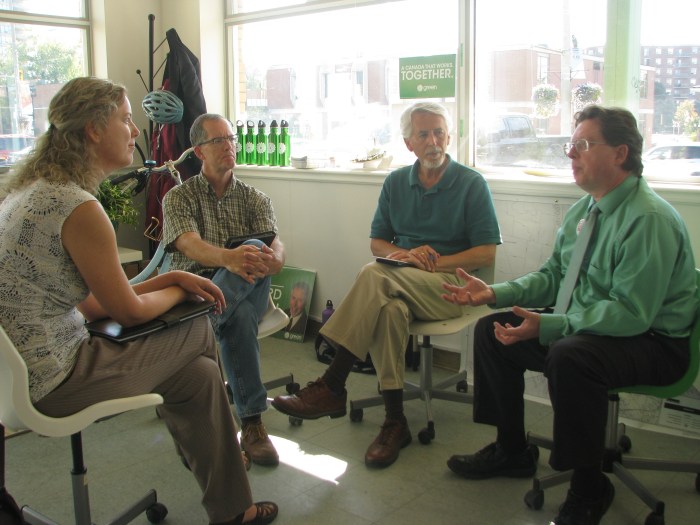
Basic Income Waterloo meets with Richard Walsh and Bob Jonkman at the Waterloo Greens Office during the 2015 election
Basic Income Waterloo advocates meet with Richard Walsh & Bob Jonkman at the WRGreens Office [2015]
A Guaranteed Liveable Income is Green Party of Canada policy.  During the 2015 Election it was a integral piece of the GPC’s integrated plan to eliminate poverty in conjunction with a renewed commitment to Universal Health Care, the introduction of Pharmacare, a National Housing Strategy, and the elimination of Post Secondary tuition and debt relief for those struggling under enormous student debt loads.

Oddly enough, this is not at all a new thing.  The Canadian Government partnered with the Manitoba Government to run a guaranteed annual income pilot project they called Mincome in Dauphin ~ A Town Without Poverty?  back in the 1970s.  As often happens with long term projects in countries using winner-take-all voting systems, the government changed and the new lot boxed up all the data and stored it away.

This is becoming a hot topic worldwide, and here at home we’re hearing about this from all levels of government:

FEDERAL
The Trudeau Liberals just prioritized one of Richard Nixon’s favourite conservative policies: ‘mincome’

PROVINCIAL
A Basic Income For Ontario? Province Plans Pilot Project As Part Of Budget

MUNICIPAL

The Waterloo Green Party is hosting the second Guaranteed Livable Income Green Learning Community event on Saturday to help get a handle on what this social policy is all about.

GLI slide
Announcing the GLI Learning Community @KPL

As a learning community, we’ve met once already to develop a set of questions we’d like to explore. When we meet on the 18th, we’ll dig deeper, sharing what we’ve learned and discussing more in depth.  All are welcome, there is no need to have attended our first session.

You can join the Green Learning Community Event

Guaranteed Livable Income
Learning Community ~ Session 2

Saturday
1:30 PM – 3 PM

The Journey ~ A Christian Church
16 Eby St. N.
Kitchener, ON

*note: although the venue this time is a church, it is a non-secular event

Further Reading:
The Manitoba Mincome Study; Even a small Guaranteed Income has dramatic positive effects on society
Download the 39 page PDF file:
THE TOWN WITH NO POVERTY Using Health Administration Data to Revisit Outcomes of a Canadian Guaranteed Annual Income Field Experiment

You can get more information from our awesome local advocacy group, Basic Income Waterloo Region

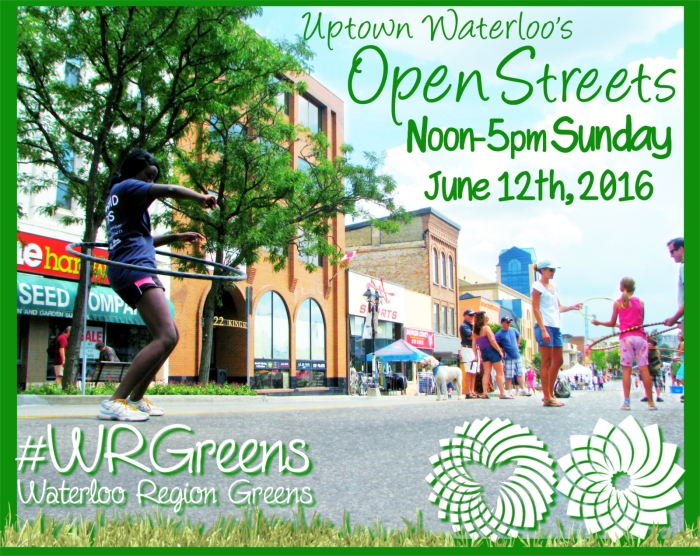
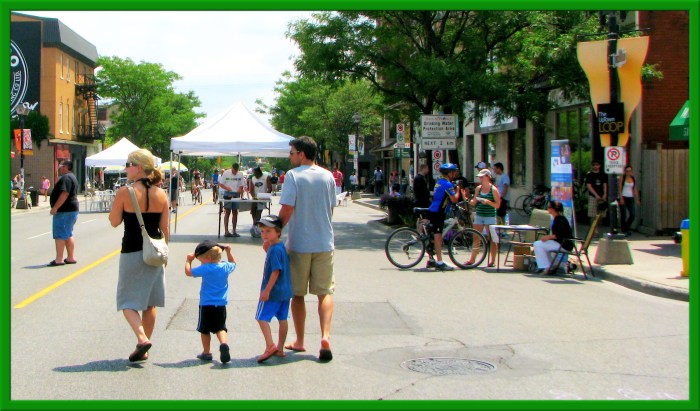
WRGreens at OpenStreets 2016

Join us in Uptown Waterloo Sunday Afternoon for the 2016 Open Streets launch!
WRGreens at Open Streets Uptown Waterloo 2016

The Waterloo Region Greens invite you to drop by and say “hi!” at our first ever Open Streets information booth! Grab a WRGreens sticker and sign Elizabeth’s electoral reform petition!’

Walkwalk

bikebike
scootscoot
skateboardskateboard
or fly down to check it out!fly

There’s always lots to doThings to do
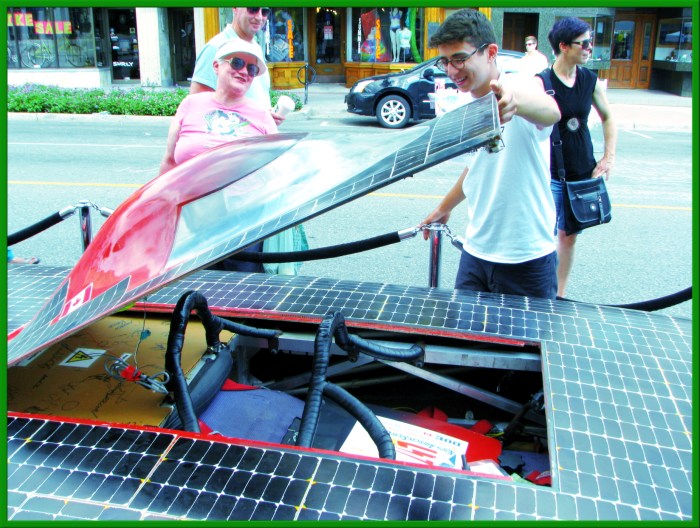
seeU of W solar race car
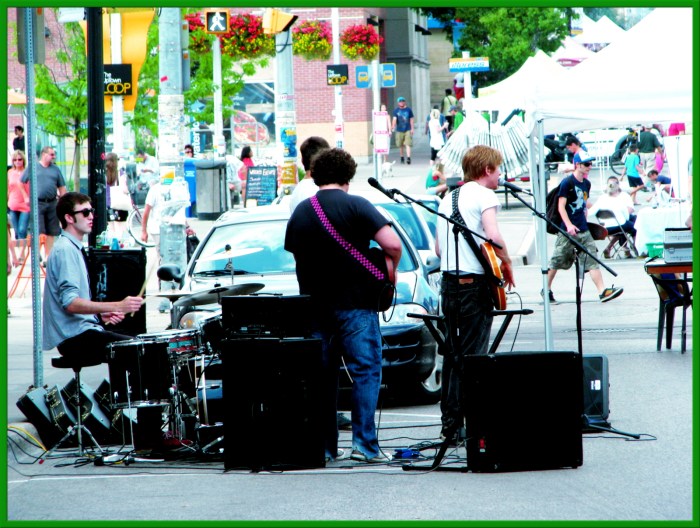
and listen to!Badlt Sketched Poets (2013) at Open Streets
If you’ve never been to an Open Streets before you’re in for a treat!

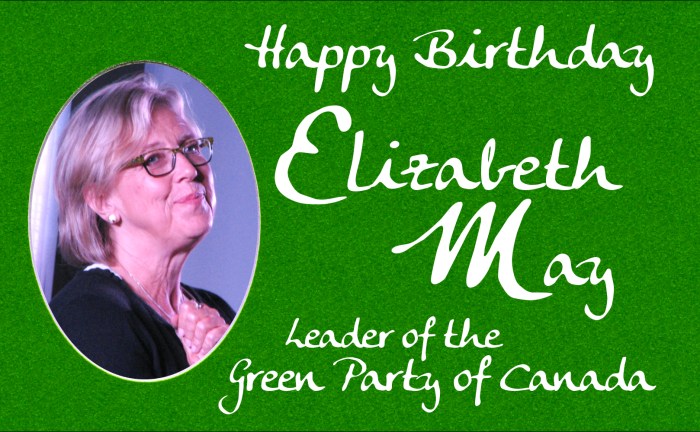
Happy Birthday Elizabeth & Mike!

The Waterloo Region Greens send our warmest greetings

Happy Birthday Elizabeth

 to Elizabeth and Mike on your shared birthday!

Happy Birthday Mike!